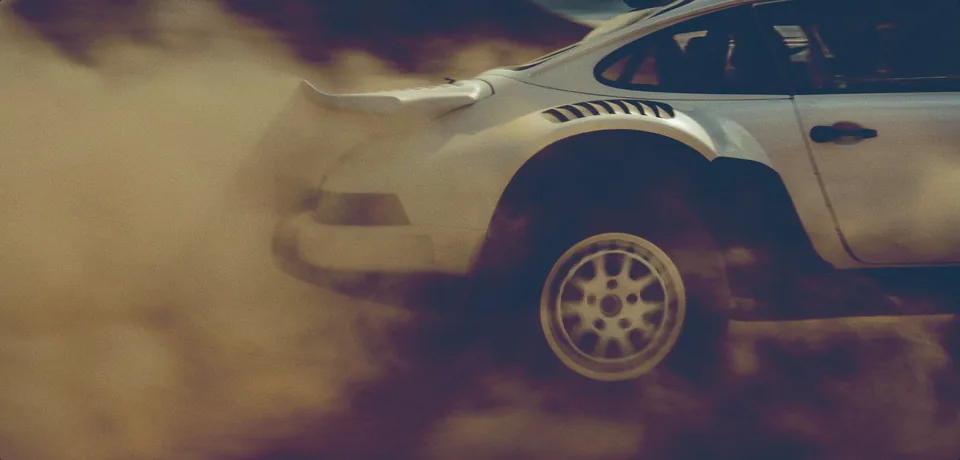

Brand strategy + editorial direction
Dusty Times was once the primary publication of the off-road racing world. I helped rebuild it as a new kind of media brand.
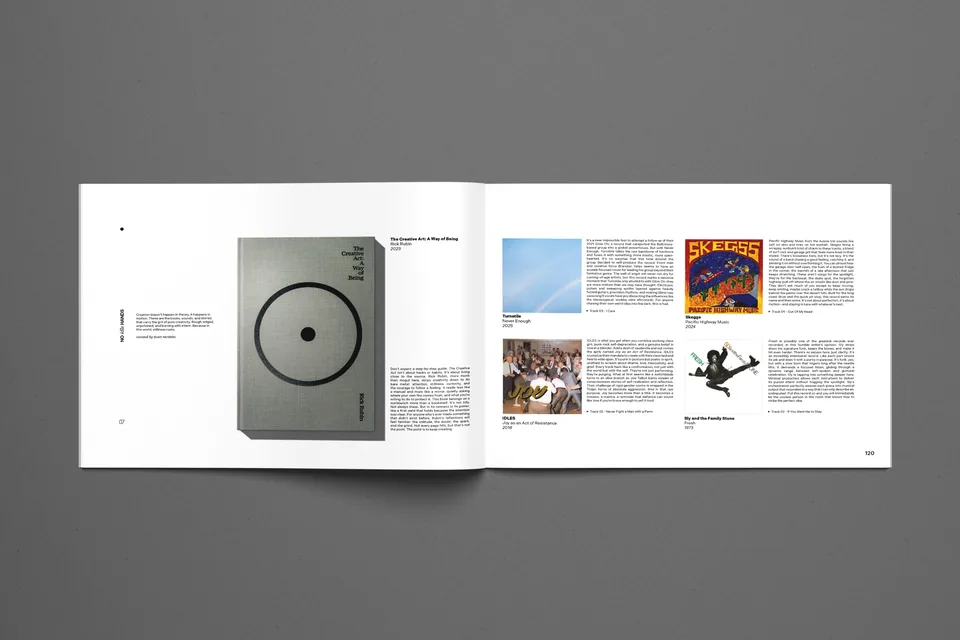
As founding partner and design director, I led the transformation of a legacy racing newspaper into an annual lifestyle journal with cultural relevance and long-term brand equity.
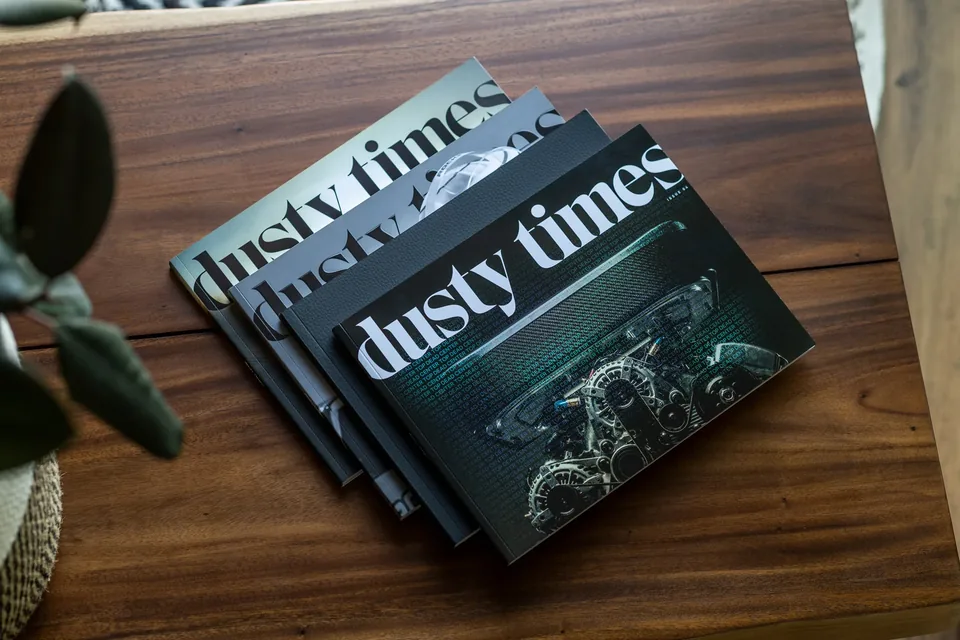
Rebuilding Dusty Times
From 1983 to 2013, Dusty Times was a newspaper connecting the off-road racing community through race coverage and classifieds. Its revival in 2019 gave that familiar name a new purpose.
The shift to an annual journal made room for long-form stories, photography, and a slower pace. The new medium needed to feel worth keeping.
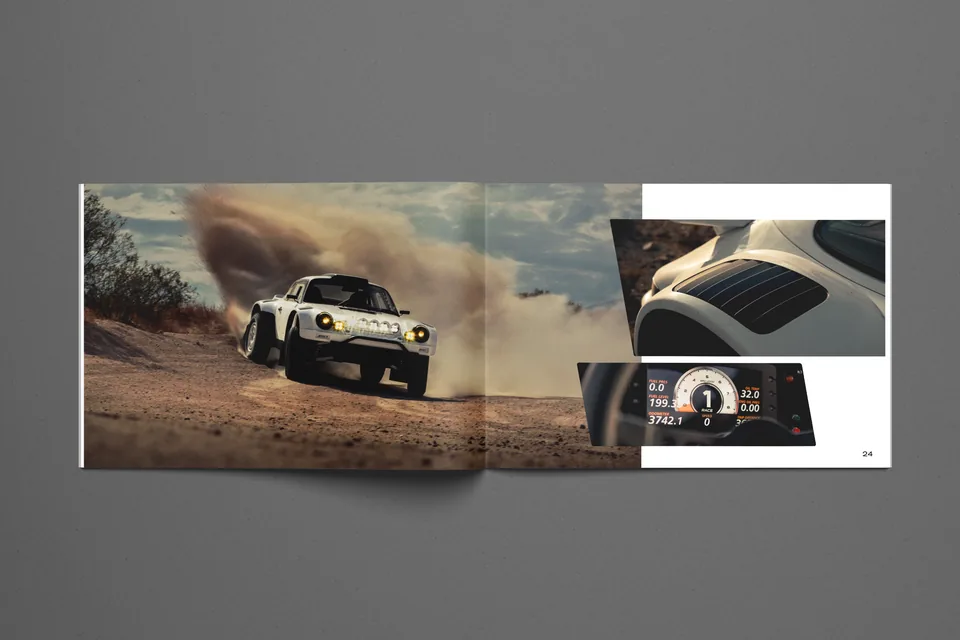
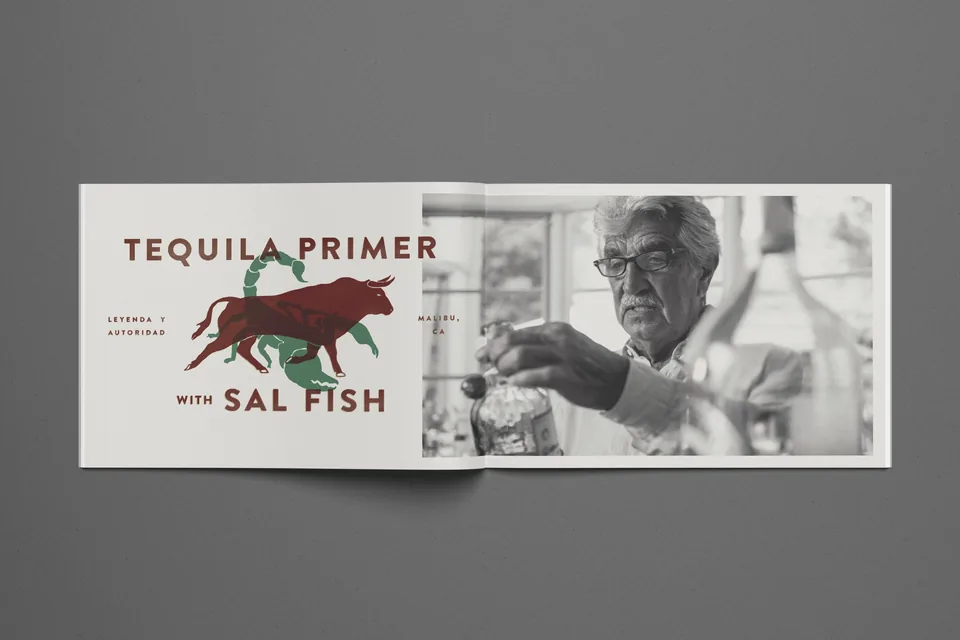
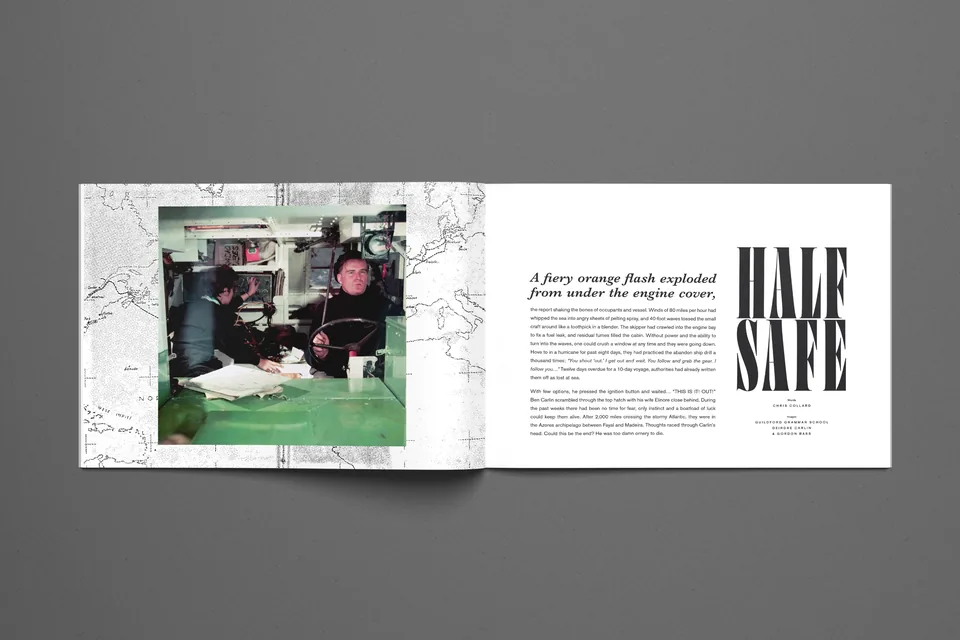
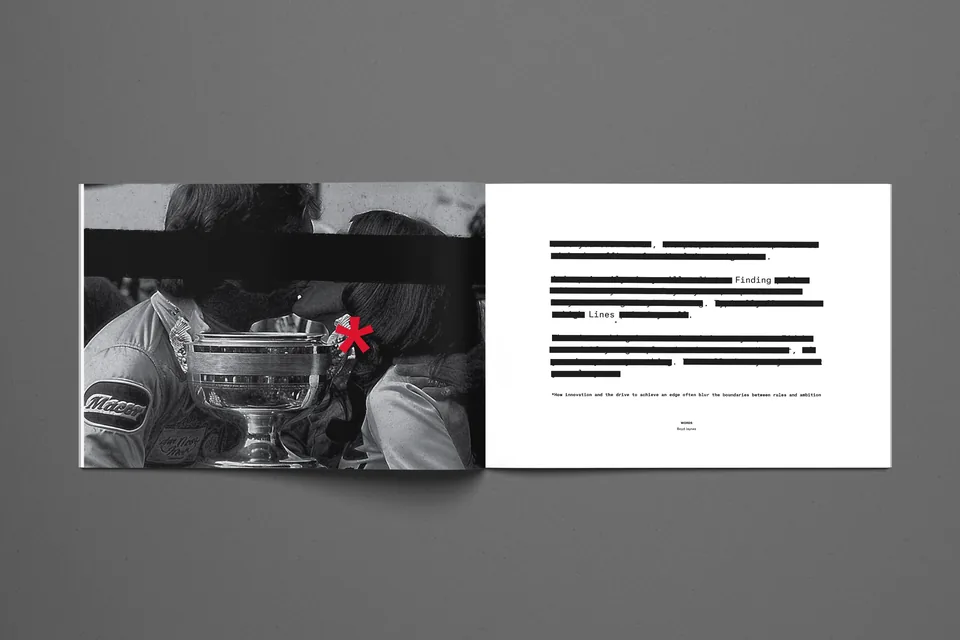
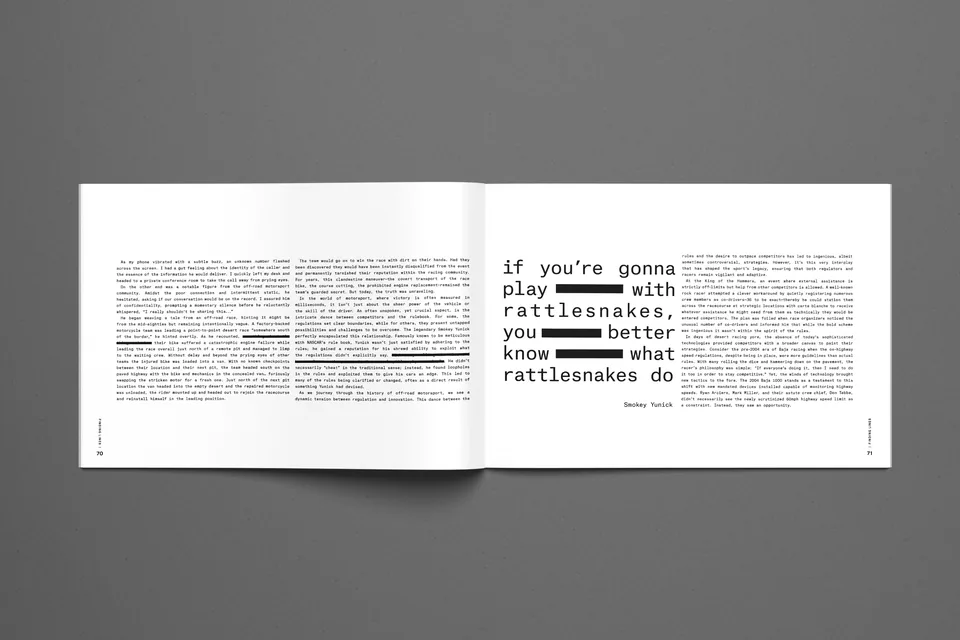
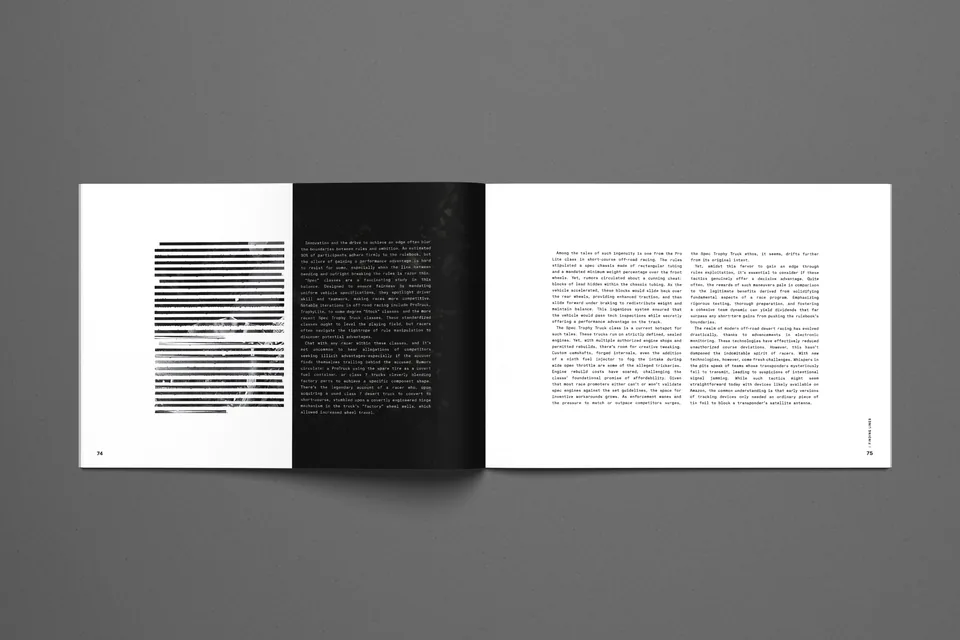
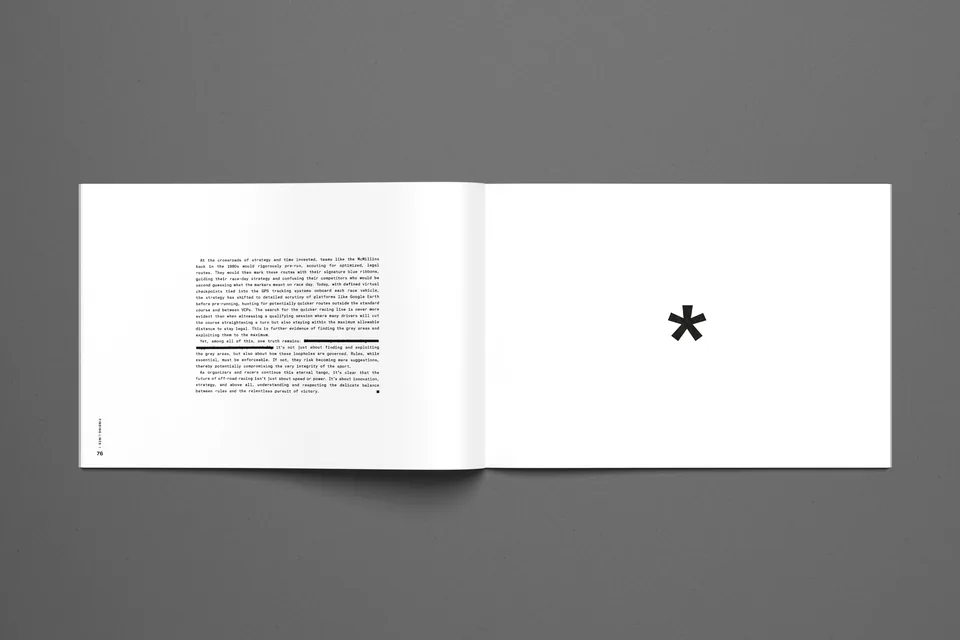
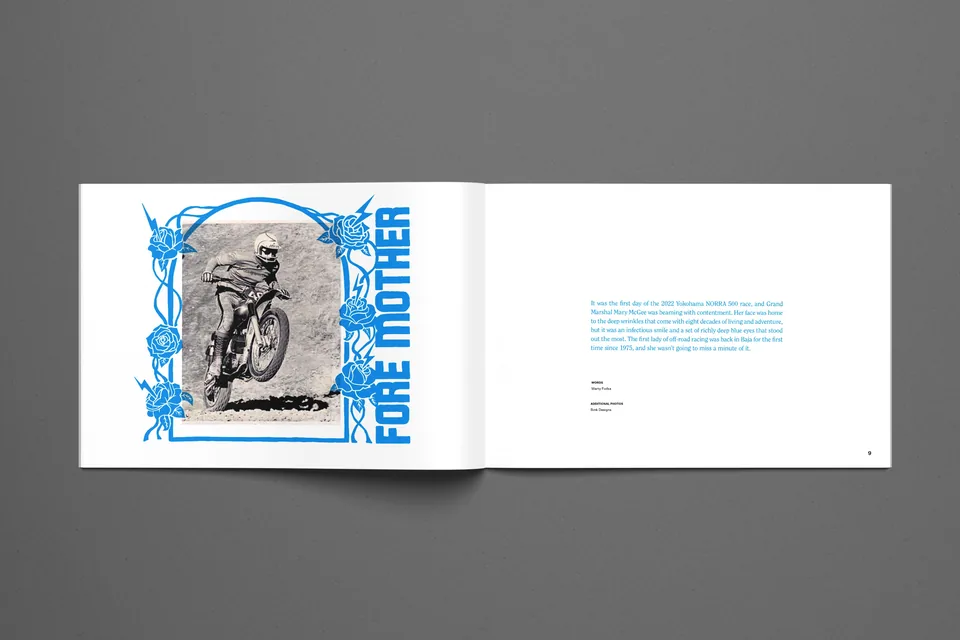
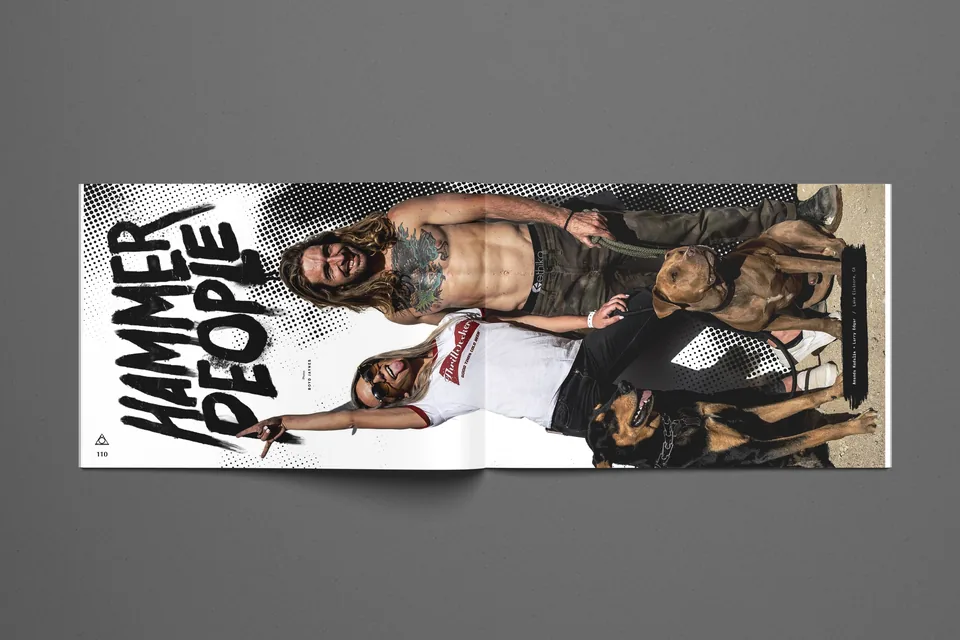
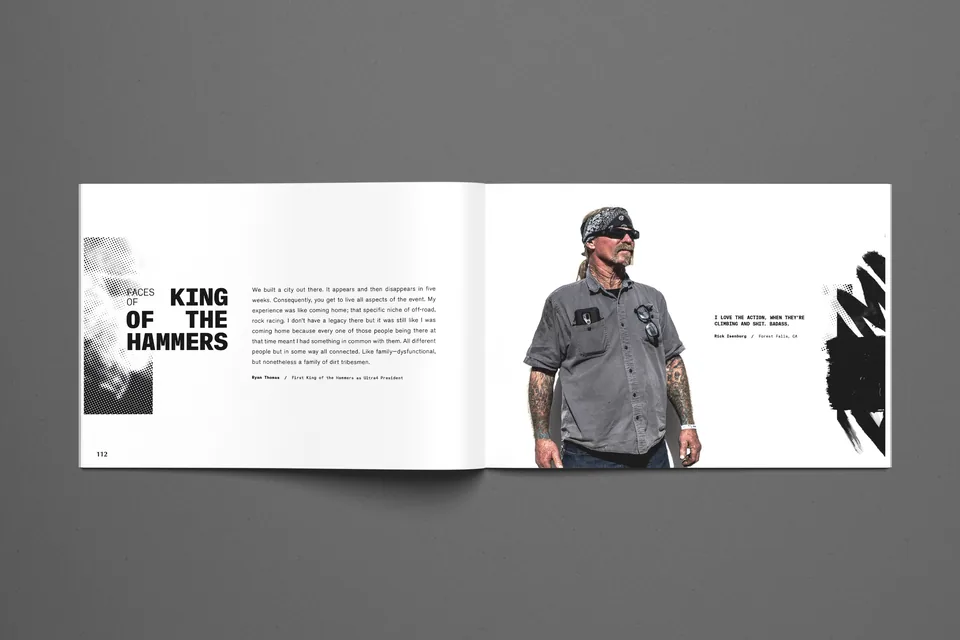
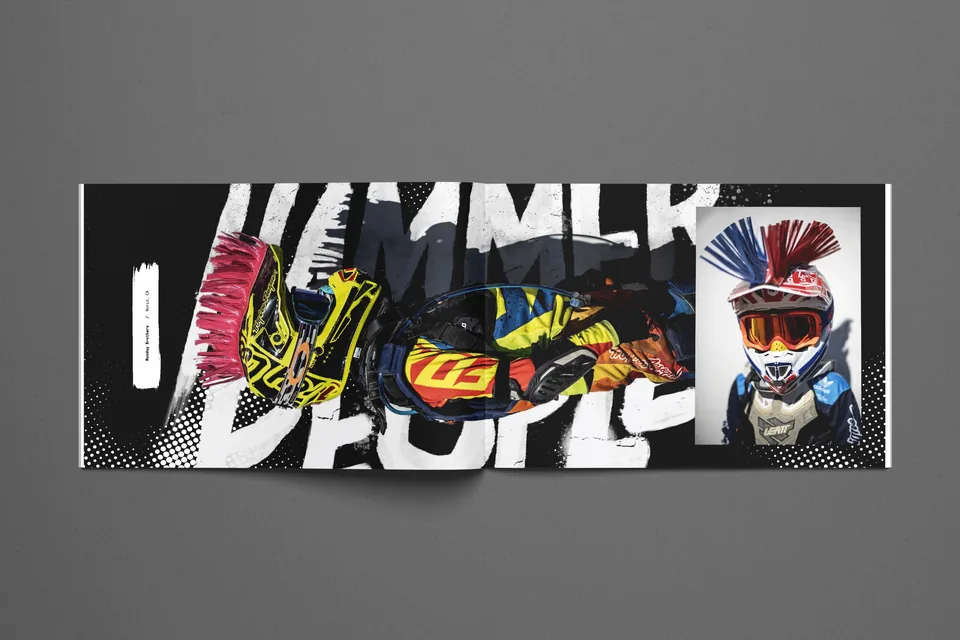
The design direction was built around photography, confident typography, and layouts that balance immersion with breathing room. Each issue could take on its own character while remaining part of a recognizable collection.
Made to be kept
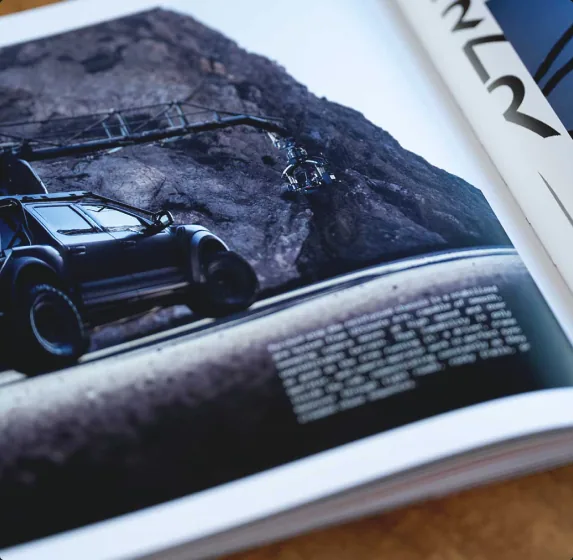
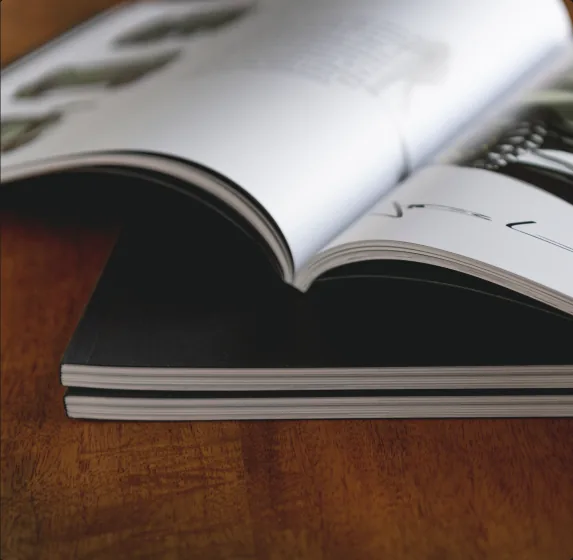
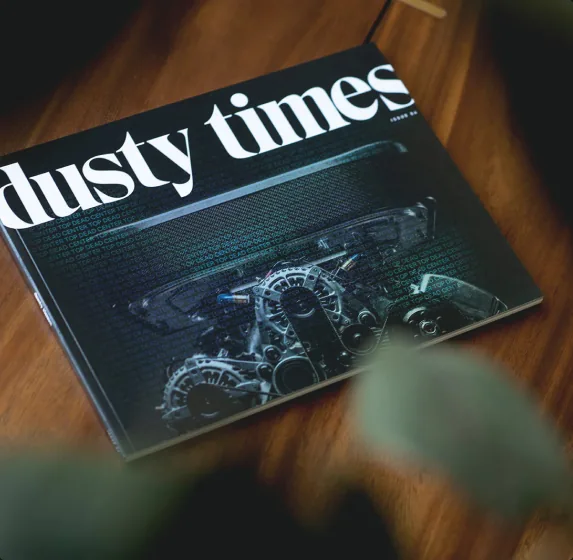
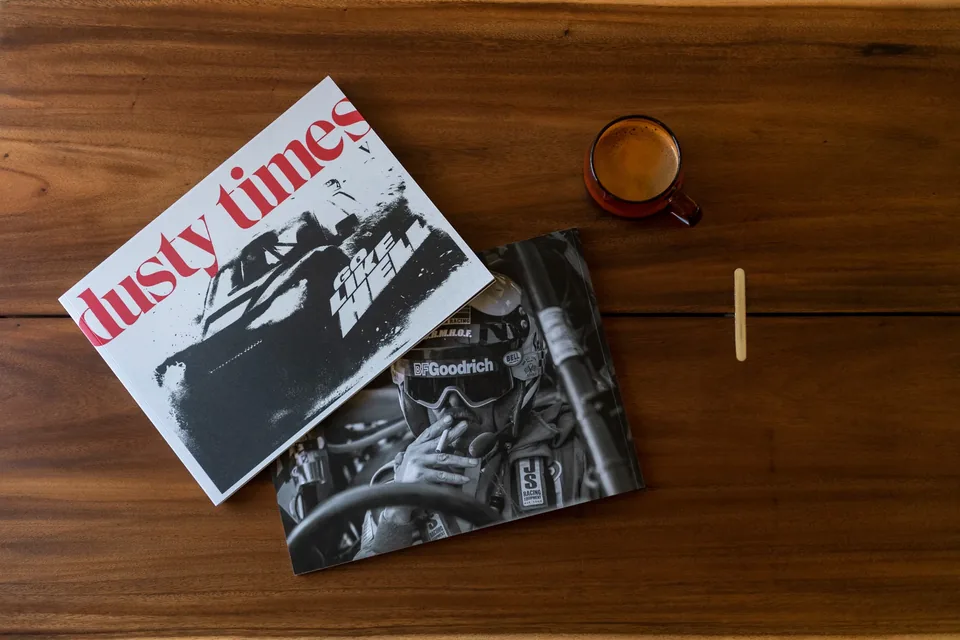
The format gives the work room: a 9 × 12 inch, perfect-bound journal with more than 110 pages per issue. Heavy paper, a smooth matte-like finish, and a coated cardstock cover make the physical object part of the design.
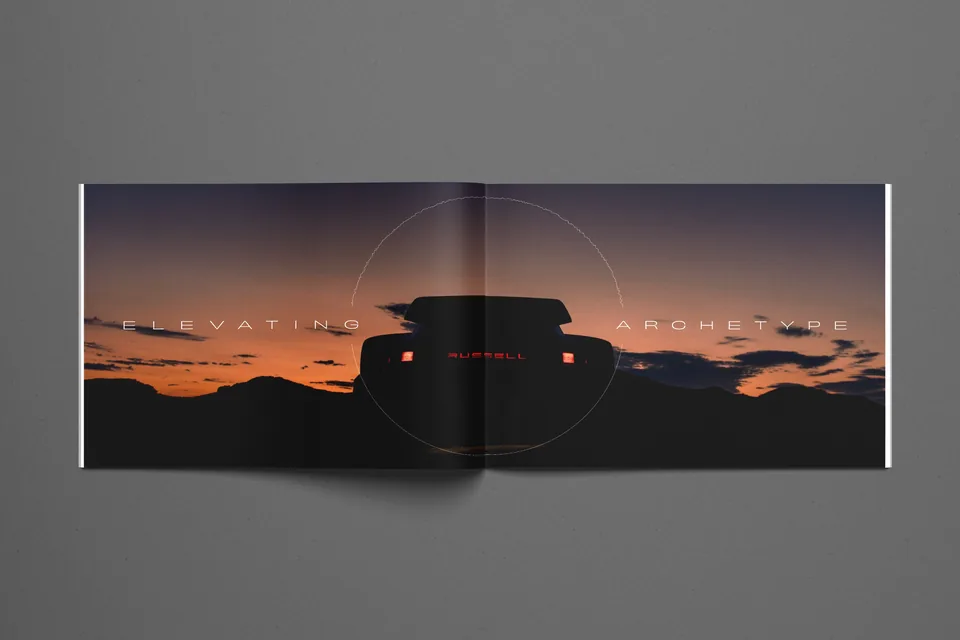
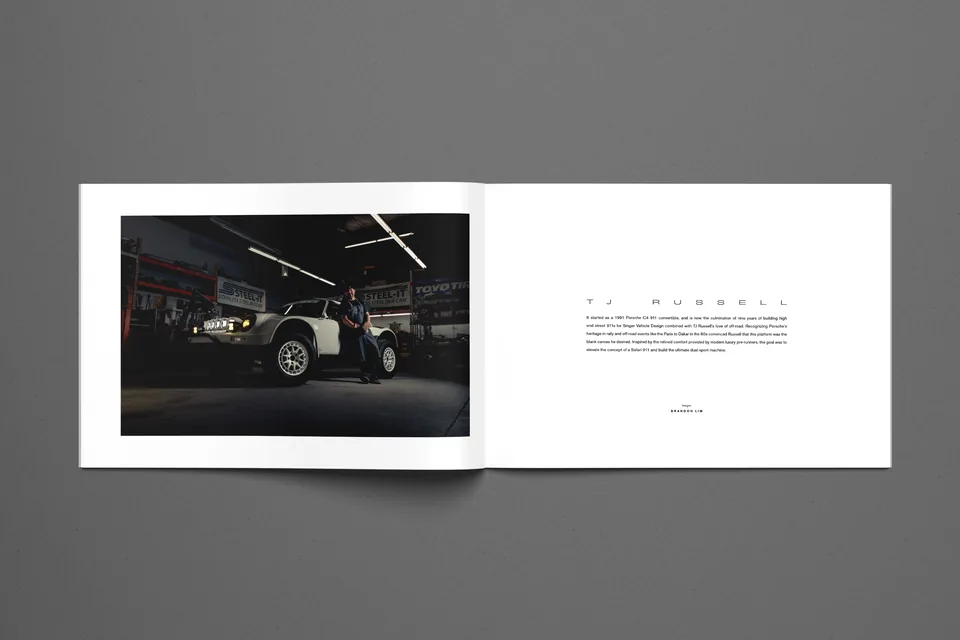
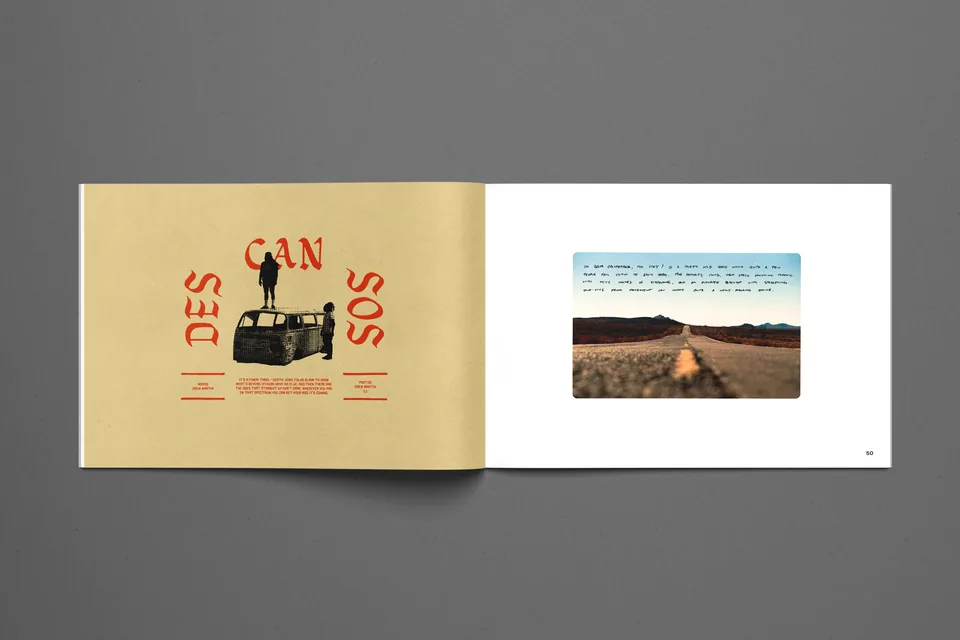
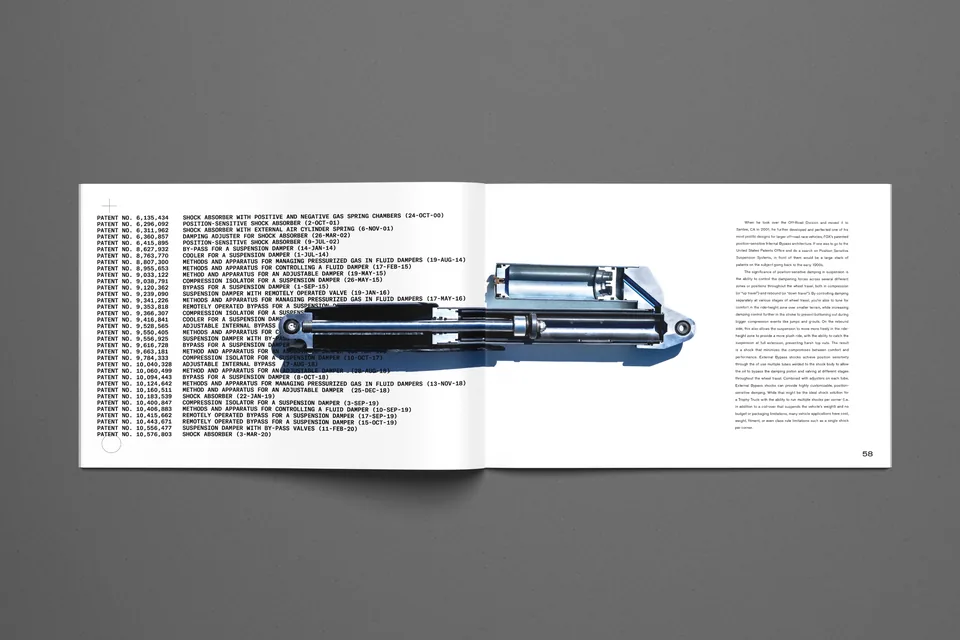
Unique perspectives and photography lead each issue, with limited to no advertising. The cover has to work at a distance and reward a closer look. Inside, the pace changes between photographs, dense passages of text, and spreads with room to breathe.
On the page
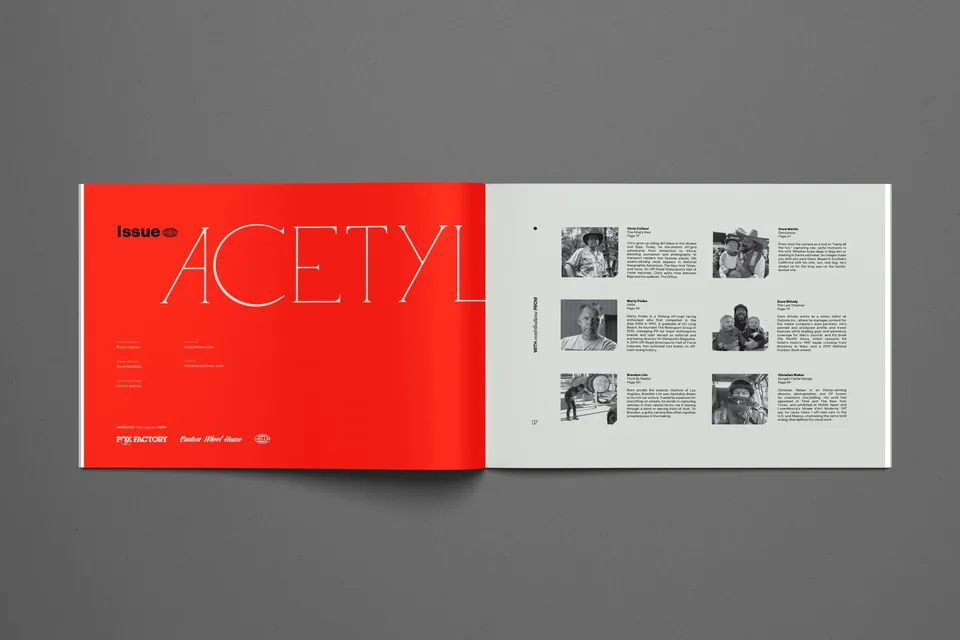
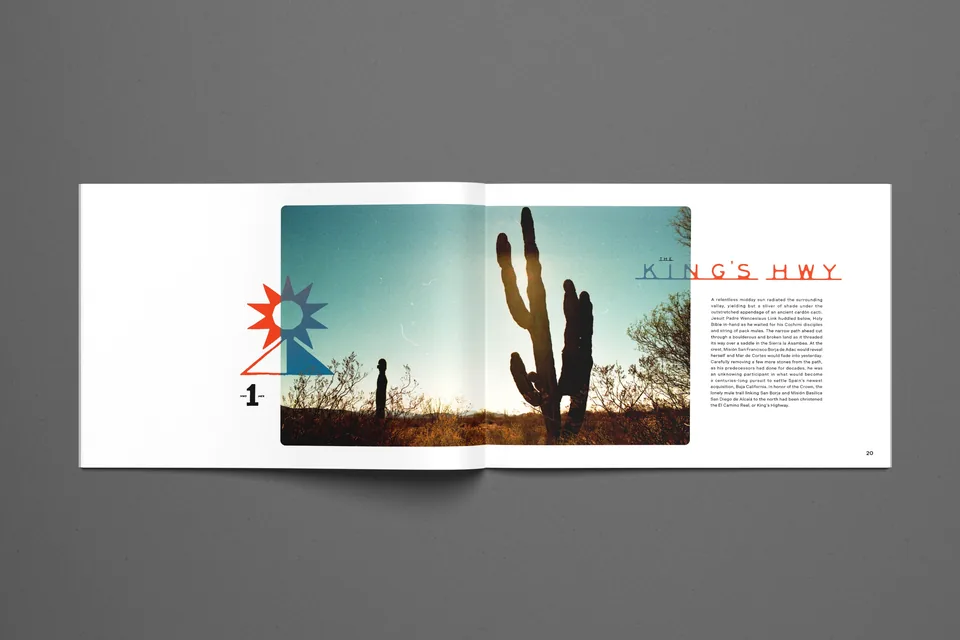
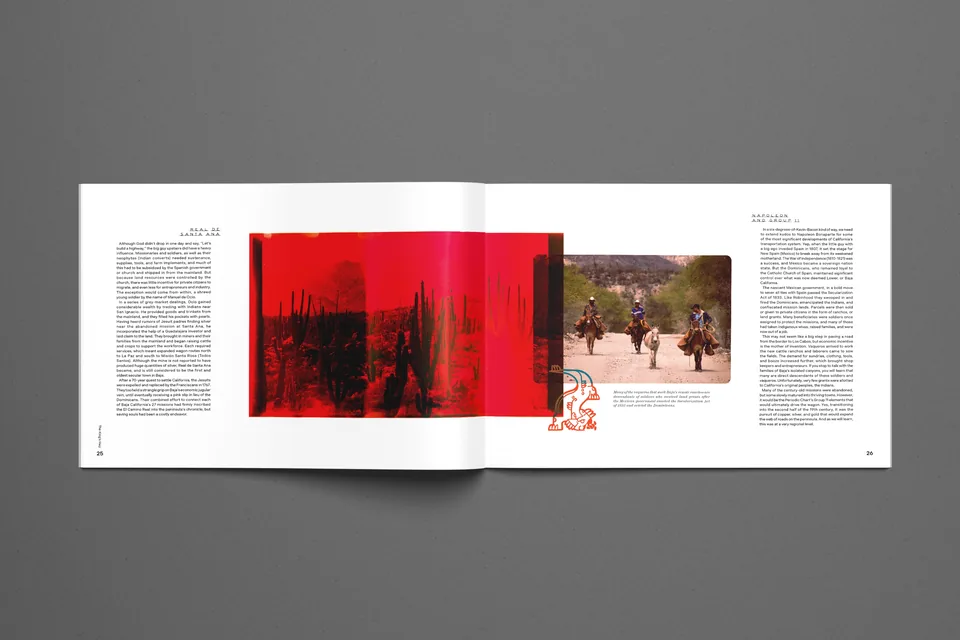
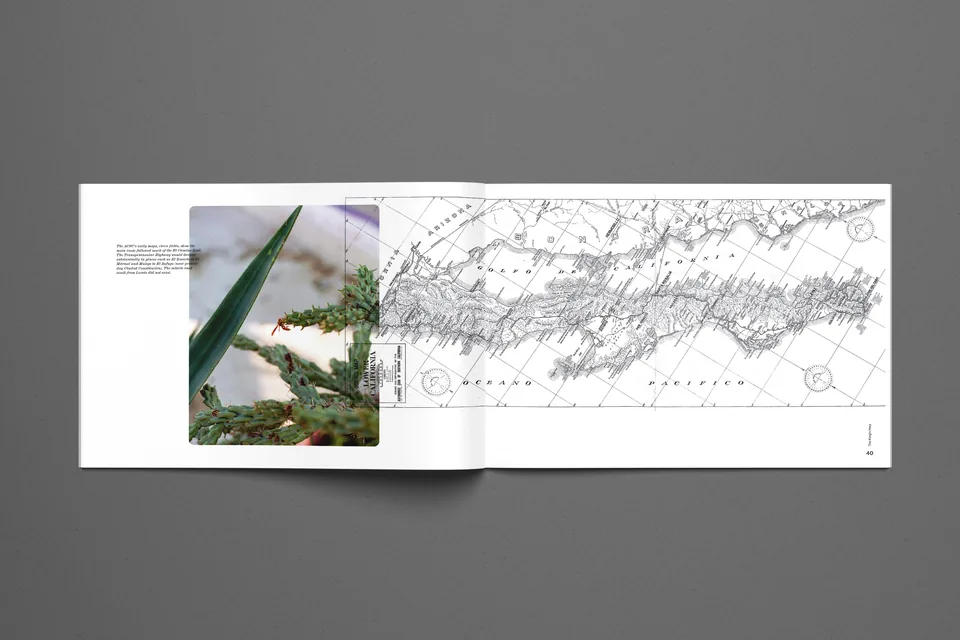
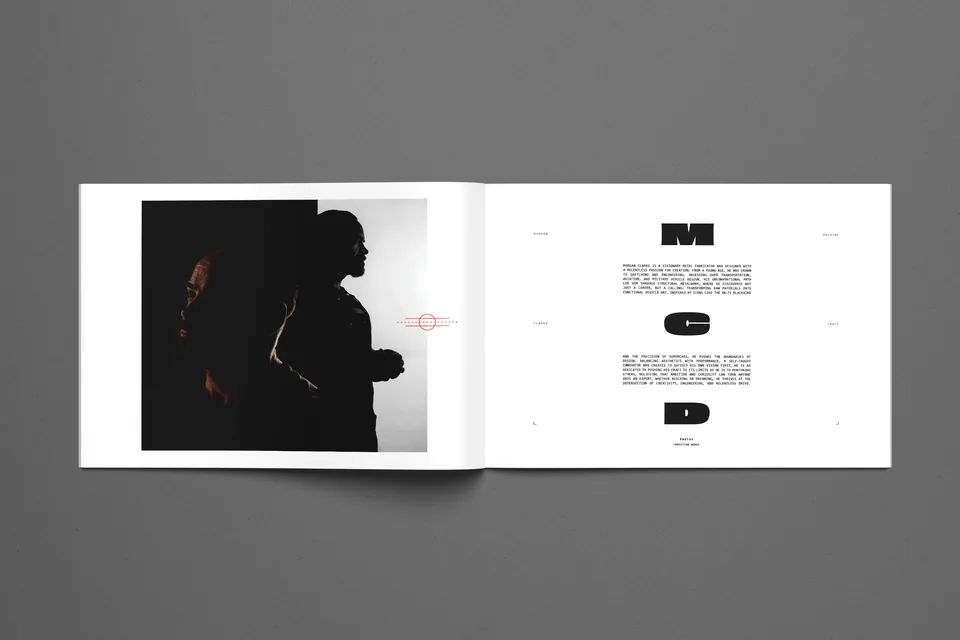
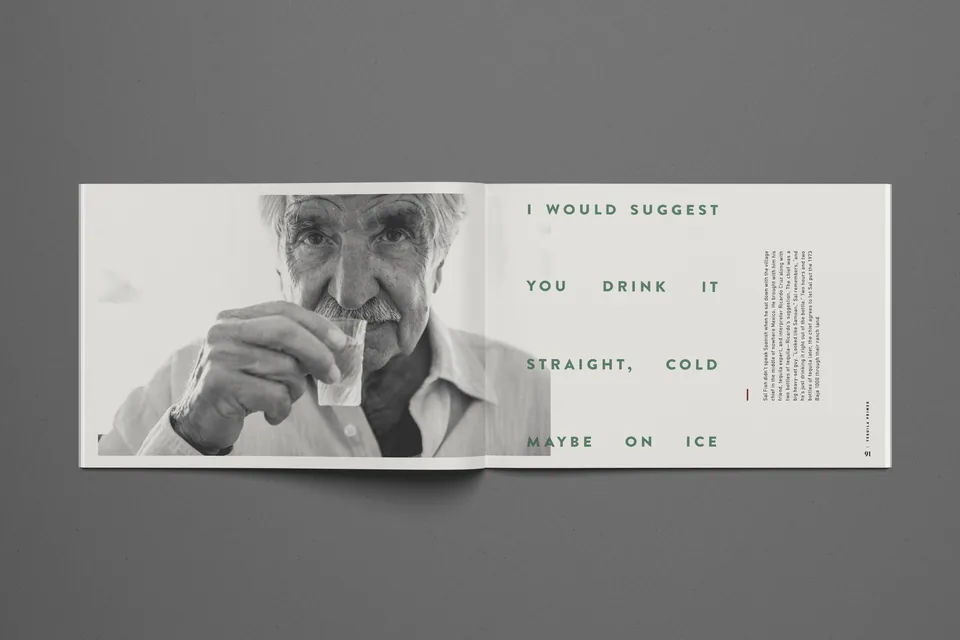
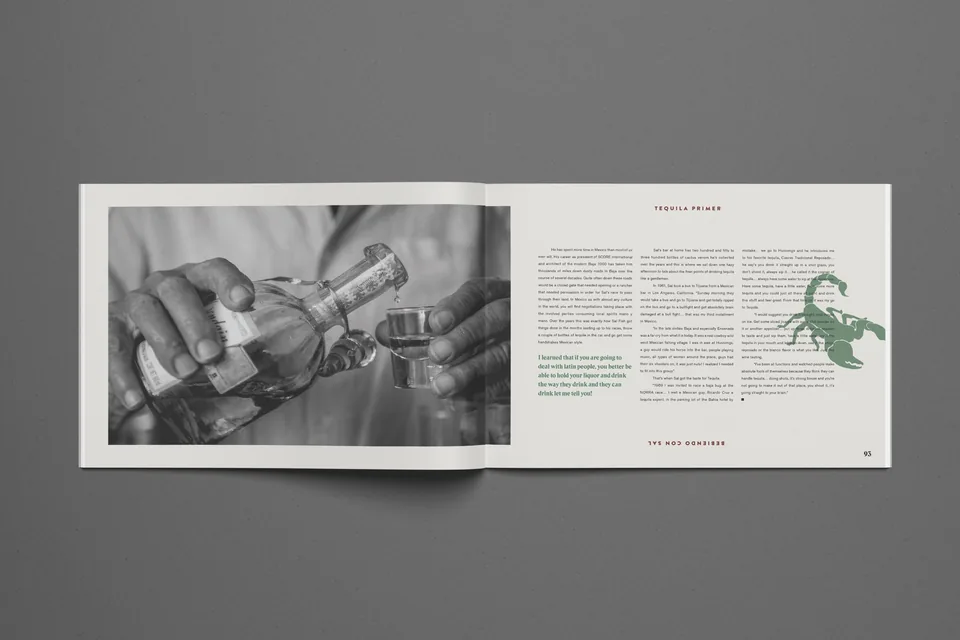
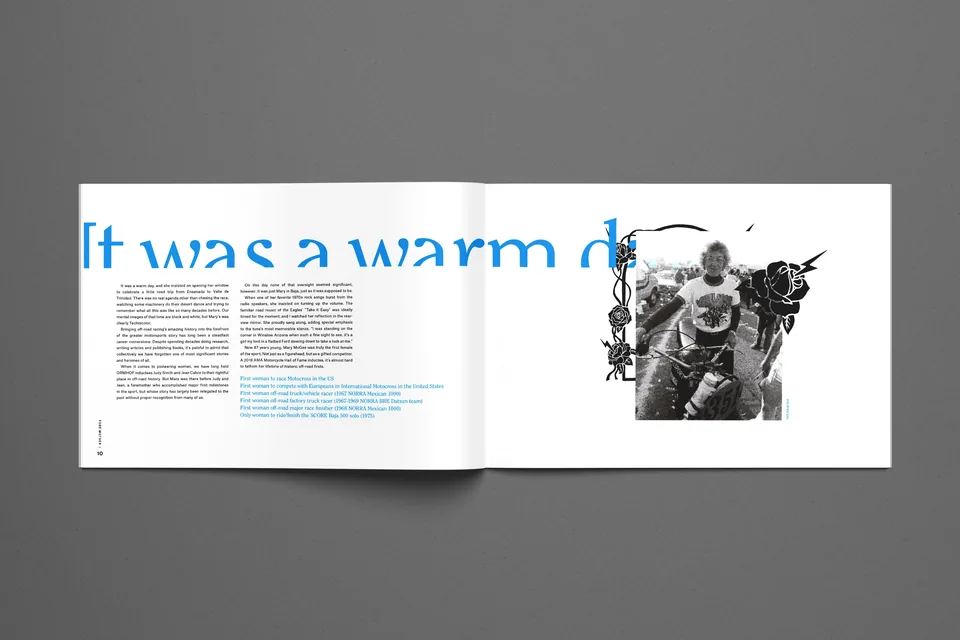
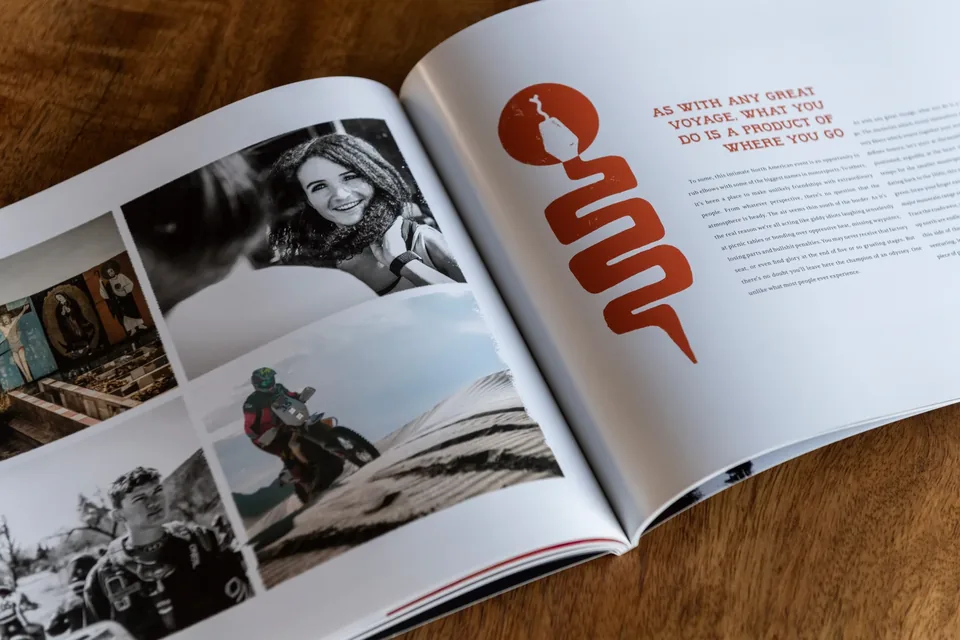
Photography leads, but the pages do more than frame images. A small red graphic can pull a desert photograph into the typography. An oversized title can turn a portrait into an opening. A passage of blue type can become the visual center of a spread.
The system leaves room for those shifts. Each feature needs a rhythm that fits its subject, with enough consistency to belong to the same book.
Constraints
The project operated without a clear business model.
Early issues were fully funded internally. Advertising was intentionally excluded to establish credibility. Distribution and audience willingness to pay were unknown.
Production added another layer of complexity, requiring me to learn the mechanics of print publishing in real time.
The first print run of Issue 01 was fully scrapped and reprinted to protect the standard of the brand. A sobering learning moment, and a decision that set the tone for everything that followed. Brand above all else.
Editorial discipline
Growth created pressure to expand content.
I chose to narrow instead.
I selected stories for their alignment with the brand standard, not access or convenience. I turned down strong material when it did not meet the level of execution the publication needed.
This protected the integrity of the publication.
Beyond the book
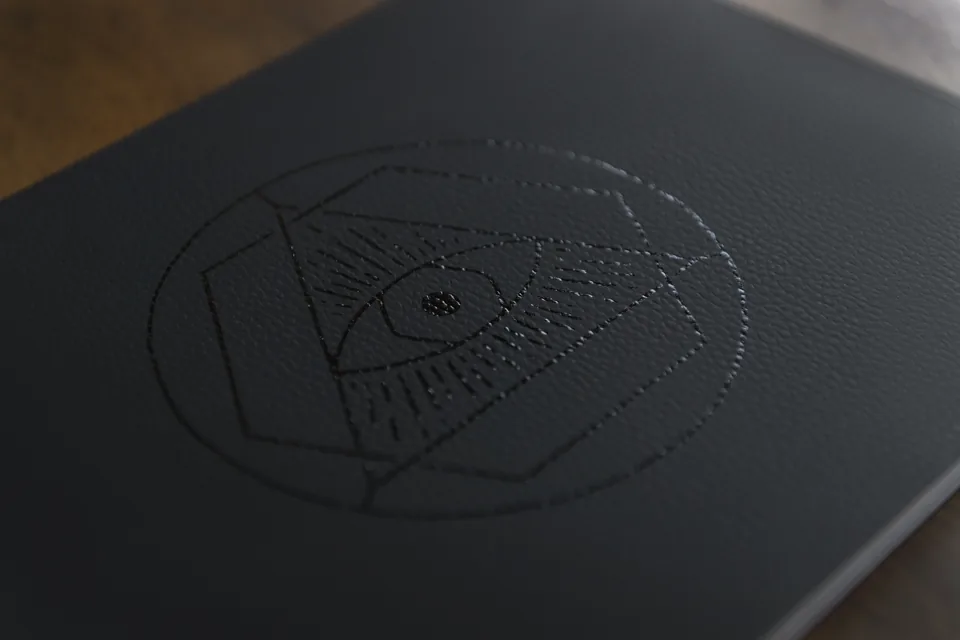
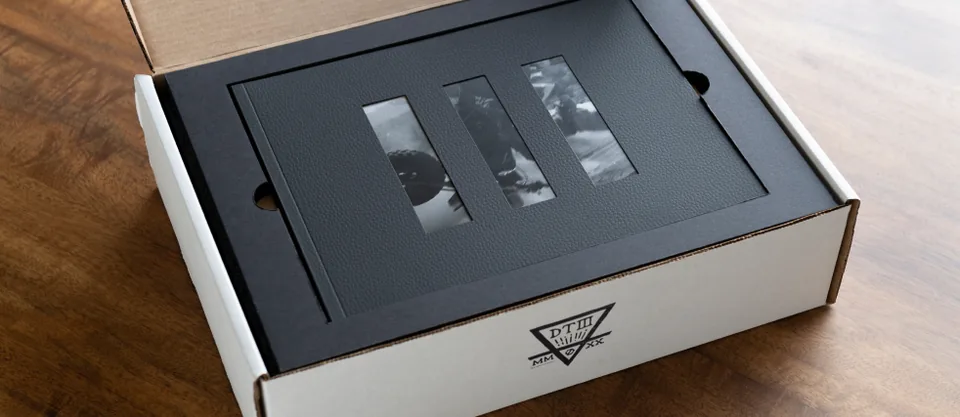
The same attention extends to how an issue reaches people. Limited runs of 300 VIP gift boxes go to a hand-picked audience of athletes, event organizers, and people within the industry.
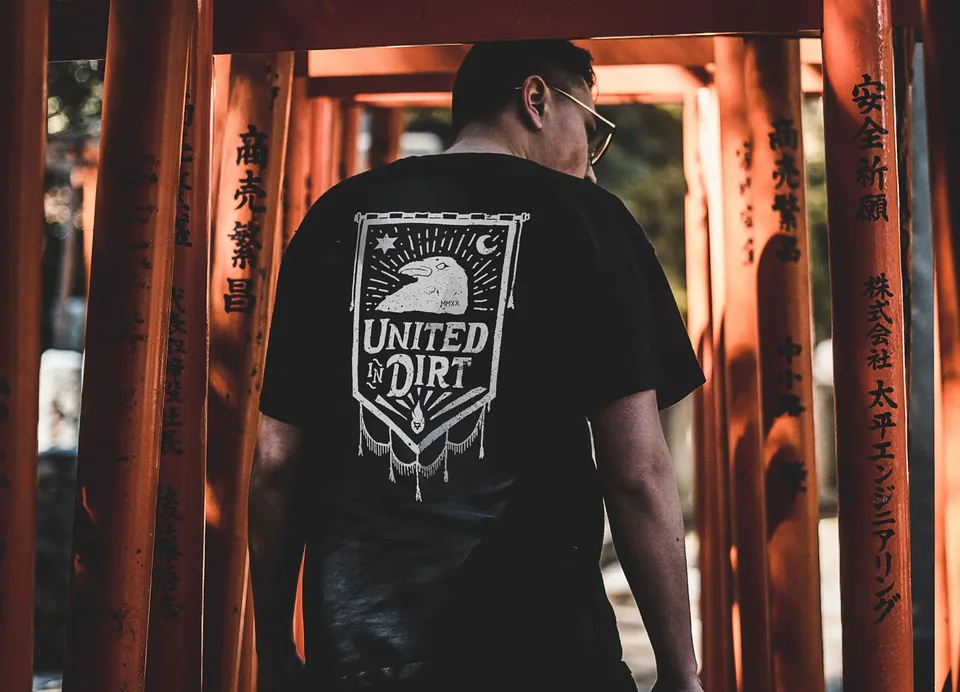
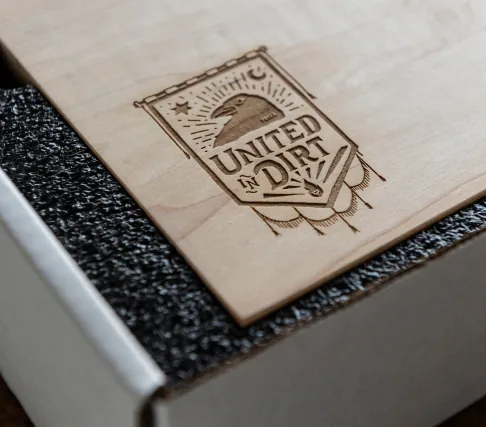
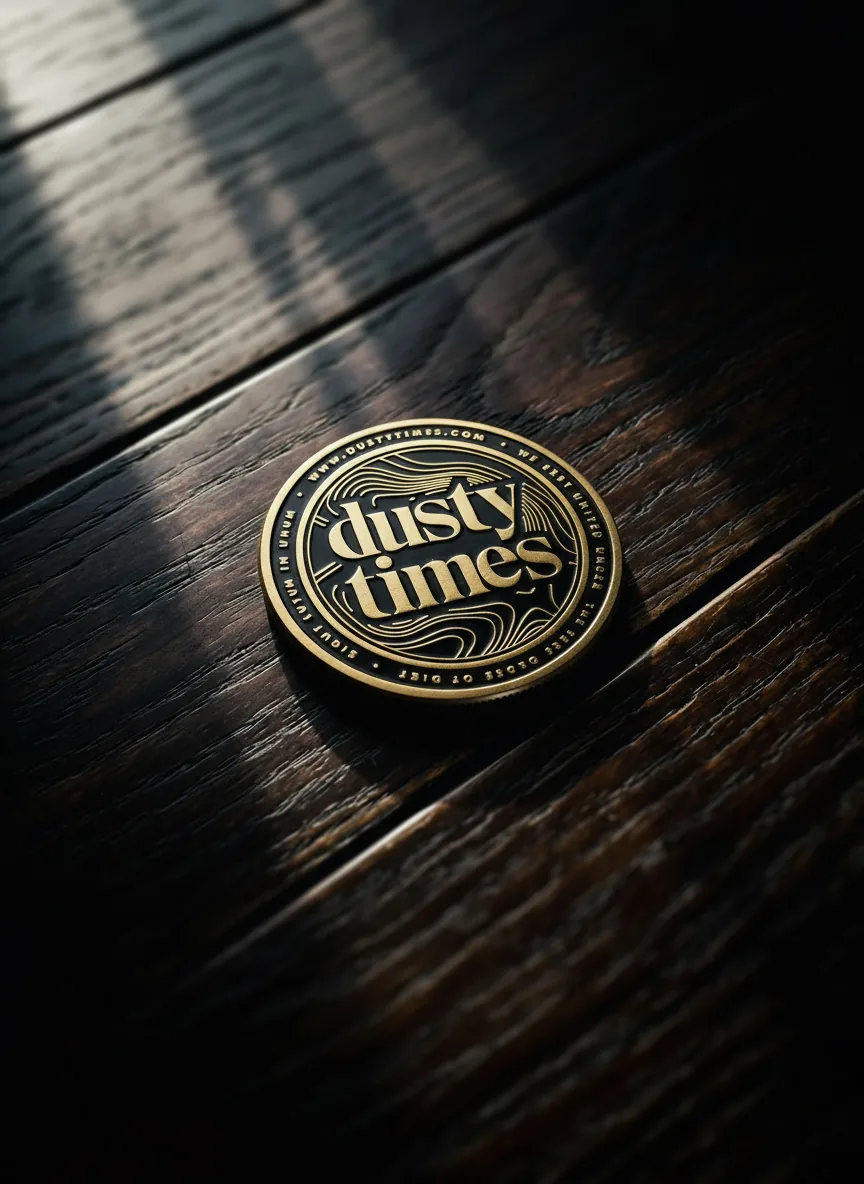
Packaging, collectible coins, apparel, and event installations give the identity a life outside the pages. The publication remains the starting point.
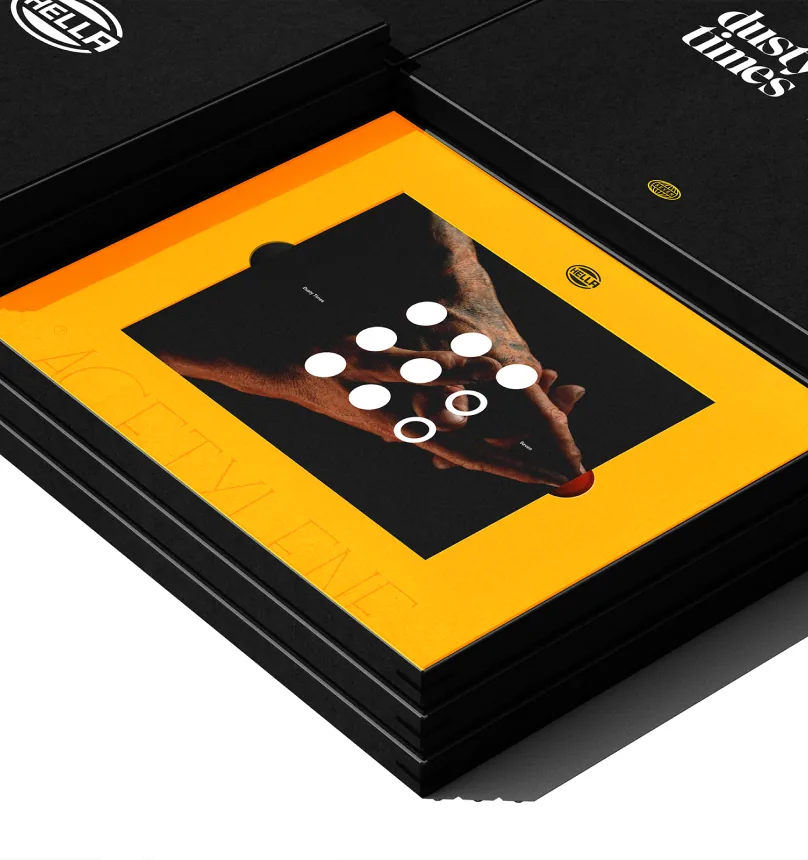
Hella partnership
The 2025 Hella collaboration brought the publication and its physical presentation together. Issue 07 included a two-page ad, a 12-page brand story, and a 10-page feature highlighting key products.
The partnership extended to 250 limited-edition Hella × Dusty Times boxed books for VIP gifting, events, and customer incentives. Content usage rights and collaborative social posts gave the work a life beyond the issue.
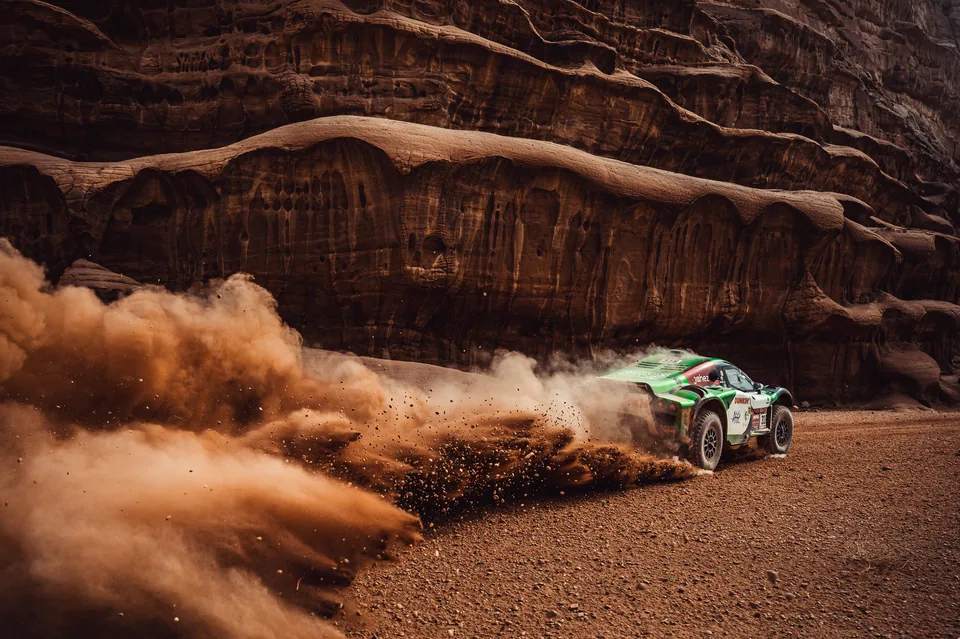
Dusty Times now operates as a cultural object within the off-road industry. It carries weight beyond its content. The original audience recognizes the legacy. A new audience engages with it as a modern expression of the culture.
The brand has become a point of alignment for partners, contributors, and events. Dusty Times is expanding into a broader platform — the publication anchors a growing set of partnerships, sponsorships, and event integrations. Print remains central. The system is built to scale beyond it.
Let’s talk
and build the brand with care from the start.